
If you’ve lived in Lakewood Ranch, Bradenton, or Sarasota for even one summer, you know what the rainy season looks like: near-daily afternoon thunderstorms, stretches of overcast humidity, and heat that doesn’t really let up even when the sun disappears behind the clouds. It’s one of the things that makes Southwest Florida life beautiful, and one of the things that is genuinely hard on the outside of your home.
From June through September, exterior paint surfaces on Florida homes face their most demanding test of the year. Understanding what the rainy season does to your paint, and what you can do about it, is one of the most practical things a homeowner can know going into the summer months.
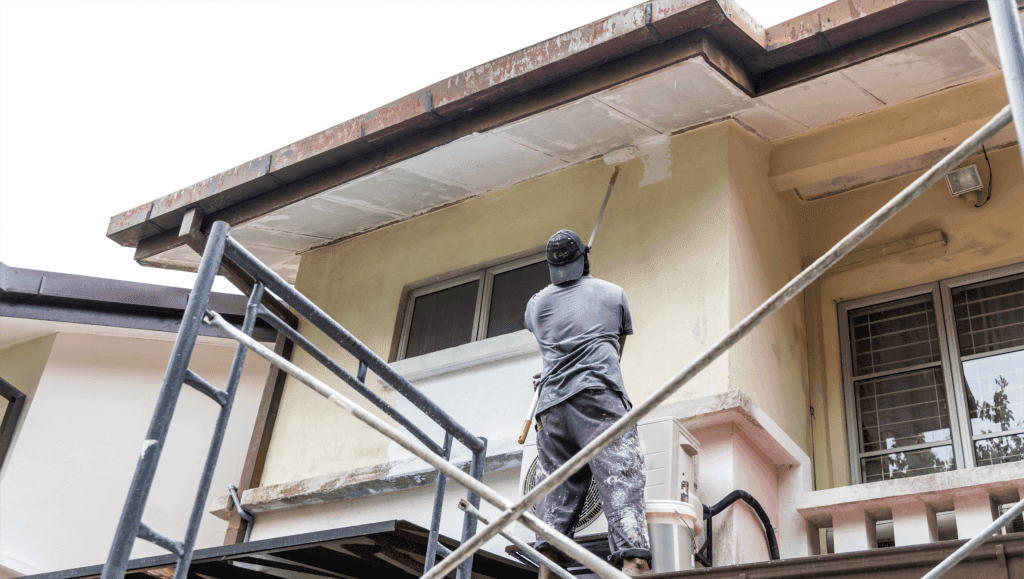
What Florida’s Wet Season Does to Exterior Paint
Moisture Infiltration and Paint Bubbling
When water gets behind a paint film, either through micro-cracks, poorly sealed gaps, or inadequate surface prep on the original job, the result is bubbling, blistering, and eventually peeling. Florida’s wet season delivers enough rain volume and pressure to exploit any weak point in your home’s exterior coating.
This is particularly common on stucco, which is the dominant exterior material on homes throughout the Lakewood Ranch and Bradenton area. Stucco is naturally porous, and even small hairline cracks can allow moisture to move through the wall system. When that moisture encounters the paint film from behind, the bond fails, and bubbles appear.
Mold and Mildew Growth
Warm temperatures plus consistent moisture are the exact formula that mold and mildew thrive in. During Florida’s wet season, the organic growth that appears as dark streaking, green staining, or fuzzy patches on exterior walls isn’t just cosmetic; it’s actively degrading the paint film.
Mildew growth is especially common on north-facing walls and shaded areas that don’t get enough direct sun to dry out between rain events. Once established, mildew can be difficult to address without proper treatment; simply painting over it allows it to grow back through the new coat within months.
Fading and UV Compounding
Florida’s rainy season doesn’t mean less sun; it often means intense sun punctuated by storms. UV exposure continues at high levels throughout the summer months, and when combined with the moisture cycles of the wet season, the fading and chalking process accelerates. Paint that might hold its color for seven or eight years in a drier climate can start showing significant UV degradation within four or five years in our environment.
Wood Rot at Trim and Penetrations
For homes with wood trim, fascia, window frames, or decorative elements, the rainy season is when deferred maintenance becomes visible and expensive. Any area where the paint film has broken down and moisture has a path to bare wood, will show signs of rot after repeated wet-season exposure. Soft, spongy wood around window frames or at the base of exterior trim is a classic wet-season warning sign.
Warning Signs to Watch for This Summer
Walk the perimeter of your home and look for:
- Bubbling or blistering paint: Any raised area in the paint film indicates moisture beneath. Don’t ignore it; it will worsen and spread with every rain event.
- Dark streaking or fuzzy growth on walls: Mold and mildew. Most common on north-facing walls, shaded areas near landscaping, and beneath rooflines.
- Peeling or flaking sections: Paint that has lost adhesion and is separating from the substrate. Often, a progression of the bubbling stage.
- Visible cracks in stucco: Even hairline cracks become significant moisture pathways during Florida’s wet season. Look particularly around windows, doors, and where different materials meet.
- Faded or chalky surfaces: Run your hand along a wall; if chalky residue comes off on your palm, the paint film is degrading and no longer protecting the substrate effectively.
- Water staining below windows or at the wall base: Indicates water infiltration at specific points, often caulk failure around window frames or ground-splash at the foundation.
Noticing any of these warning signs in your home? Fleet Kleen offers free estimates for homeowners throughout Lakewood Ranch, Bradenton, and Sarasota. Call 941-723-0086 or visit fleetkleenservice.com.
How to Protect Your Home’s Exterior Through the Wet Season
Address Caulk Failures Before the Rain Arrives
Caulk around windows, doors, utility penetrations, and trim joints is your home’s primary defense against water infiltration. Caulk has a finite lifespan, especially in Florida’s UV, and failing caulk is one of the most common entry points for wet-season moisture. Walk your exterior and press on existing caulk: if it’s hard, brittle, or pulling away from the surface, it needs to be replaced before the rainy season peaks.
Keep Vegetation Trimmed Back
Landscaping that contacts your home’s exterior walls traps moisture, restricts airflow, and can physically damage the paint film. During the wet season, maintaining a clear gap between plants and your home’s exterior significantly reduces mold and mildew risk on those surfaces.
Clean Gutters and Downspouts
Overflowing gutters direct water onto your home’s fascia and exterior walls, two surfaces that are particularly vulnerable. Keeping gutters clear through the wet season prevents unnecessary paint damage from redirected water.
Plan Your Painting Project for the Right Window
If your home needs repainting, timing matters. Professional exterior painting in Florida is best done outside of peak wet season; late fall through early spring offers the most consistent conditions. However, a skilled painting crew can also work around Florida’s wet season by monitoring forecasts, working in morning windows, and allowing proper cure time between applications. The key is choosing a contractor with genuine Florida experience and a real plan for wet-weather scheduling.
What Makes the Difference: Quality Paint and Thorough Prep
Ultimately, the homes that weather Florida’s rainy season best are the ones that started with the right foundation: thorough surface preparation and quality paint products. A premium exterior paint, like Sherwin-Williams Duration or Emerald, or Florida Paints Estate Ultra, has mildew-resistant additives, superior moisture barriers, and UV stabilizers built into the formula. These features aren’t marketing language; they’re measurably different in performance under Florida’s conditions.
Equally important is the prep work that happened before the paint went on. Properly cleaned, caulked, and primed surfaces give moisture nowhere to infiltrate. Homes that were painted with thorough prep simply hold up better through summer after summer, and when it’s time to repaint, they’re in far better condition for the next application.
Ready to get your home’s exterior protected before the rainy season intensifies? Fleet Kleen serves Lakewood Ranch, Bradenton, Sarasota, and surrounding communities. Call 941-723-0086 or visit fleetkleenservice.com for your free estimate.